One of the most common questions I get from homeowners in Puchong is: "How often do I actually need pest control?" It's a fair question. Nobody wants to pay for treatments they don't need, but nobody wants to discover a full-blown infestation because they waited too long either.
The honest answer is: it depends. Your ideal treatment frequency is shaped by your property type, location, pest history, and the specific pests you're dealing with. But after treating thousands of homes across Puchong and surrounding areas, I can give you reliable guidelines that work for most situations.
General Recommendations by Property Type
| Property Type | General Pest Control | Termite Inspection |
|---|---|---|
| Terrace house | Every 2-3 months | Annually |
| Semi-D / Bungalow | Every 3 months | Annually |
| Condominium / Apartment | Every 3-4 months | Every 2 years |
| Commercial kitchen / F&B | Monthly | Annually |
| Office / Retail | Every 2-3 months | Annually |
| Warehouse / Factory | Monthly | Every 6 months |
These are starting points. Let me explain the reasoning behind each, and the factors that might push you toward more or less frequent treatments.
Understanding Treatment Longevity
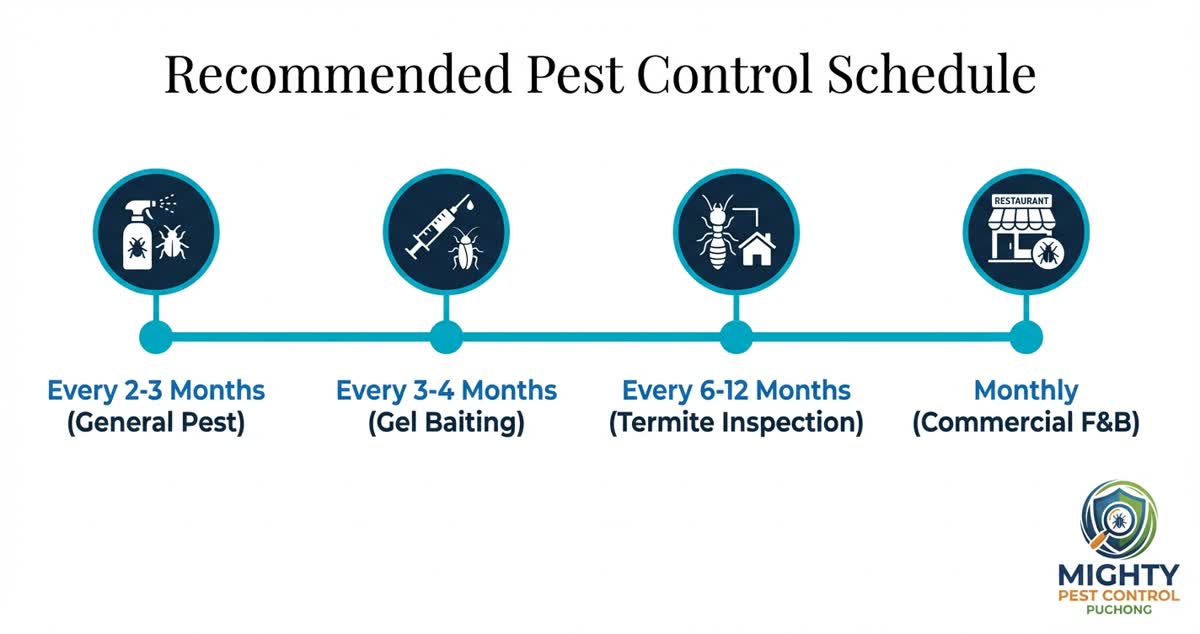
Different pest control methods have different effective durations, and this directly affects how often you need retreatment:
General Pest Spraying
Residual insecticide sprays applied to baseboards, cracks, and entry points typically remain effective for 2-3 months in Malaysian conditions. Our tropical heat and humidity break down chemical residues faster than in temperate climates. This is why quarterly treatment is the standard baseline.
Gel Baiting (Cockroaches & Ants)
Professional gel baits like Advion maintain their attractiveness for 3-4 months under normal conditions. In busy kitchens — whether home or commercial — this can drop to 6-8 weeks as the gel dries out or gets cleaned away.
Termite Baiting Systems
In-ground termite baiting stations (like Sentricon) are designed for long-term monitoring. Once installed, they're checked and refreshed every 2-3 months as part of an ongoing programme. This isn't a one-off treatment — it's a continuous monitoring system.
Rodent Baiting
Bait stations for rats and mice need checking and replenishment every 2-4 weeks during active infestations, then monthly for maintenance once the population is controlled.
Factors That Increase Your Treatment Frequency
Your home might need more frequent treatments than the standard if any of these apply:
- History of infestation — If you've had a serious pest problem before, the risk of recurrence is higher for the first 12 months
- Proximity to food sources — Homes near restaurants, wet markets, or food courts attract more pests
- Older property — Houses over 15 years old typically have more entry points and deteriorating seals
- Pets in the home — Pet food, bedding, and outdoor access can attract pests
- Lots of vegetation — Gardens and large trees near the house create pest habitats
- Construction nearby — Building works disturb pest colonies and push them into surrounding properties
- Neighbouring units with pest issues — Especially relevant for terrace houses
Signs You Need More Frequent Treatment
Between scheduled treatments, watch for these warning signs that suggest you need to increase frequency or book an additional visit:
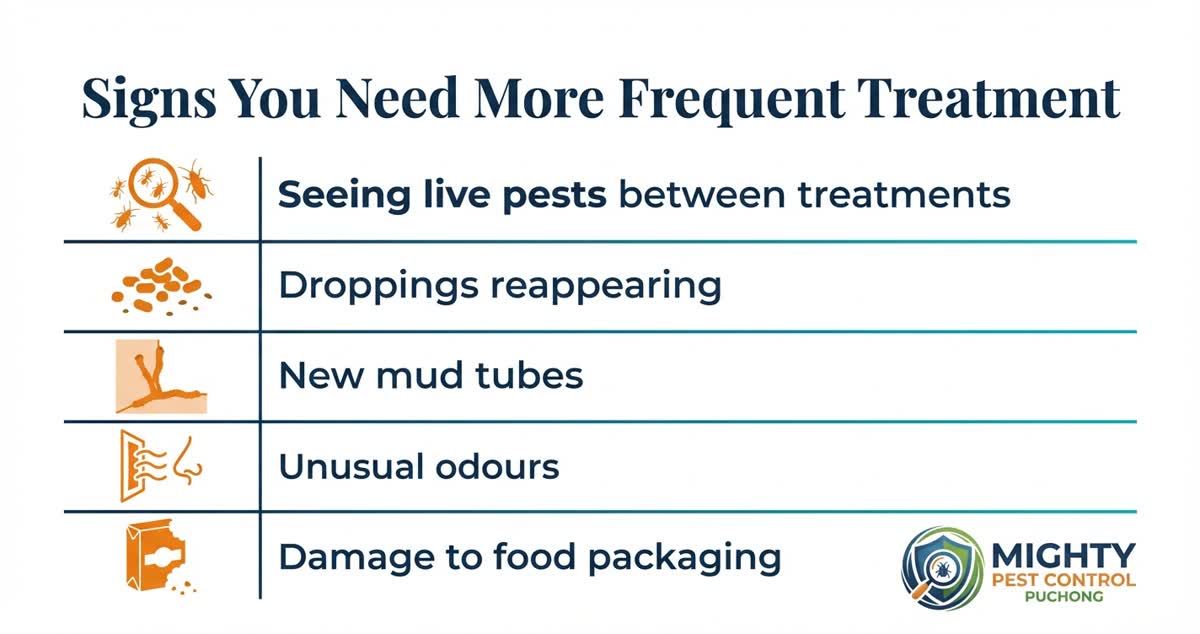
- Seeing live pests between treatments — An occasional ant is normal, but regular sightings of cockroaches or rats indicate the treatment interval is too long
- Droppings reappearing — If you clean rodent or cockroach droppings and they return within days, the population hasn't been adequately controlled
- New mud tubes — Fresh termite mud tubes appearing between annual inspections warrant an immediate call
- Musty or unusual odours — Large cockroach infestations produce a distinctive oily smell; rodent infestations smell like ammonia
- Damage to food packaging — Gnaw marks or holes in stored food indicate active rodent or pantry pest activity
The Case for Preventive Treatment
I understand the temptation to call for pest control only when you see a problem. But reactive treatment almost always costs more than preventive maintenance. Here's why:
- Emergency call-outs are more expensive than scheduled visits
- Established infestations require more intensive (and costly) treatment
- Pest damage to property — especially termite damage — can run into tens of thousands of ringgit
- Health risks from prolonged exposure to pest-borne allergens and bacteria
Think of it like servicing your car. Regular maintenance prevents breakdowns and keeps repair costs manageable. Skip the services, and eventually something expensive fails.
Building Your Pest Control Calendar
Here's the annual schedule I recommend for a typical Puchong terrace house:
| Month | Activity |
|---|---|
| January | General pest treatment (post-monsoon, high cockroach/ant activity) |
| March-April | General pest treatment + annual termite inspection |
| June-July | General pest treatment (pre-monsoon preparation) |
| September-October | General pest treatment + rodent check (before rainy season drives rats indoors) |
Adjust this based on your specific situation. If you have a termite baiting system installed, your pest control provider will schedule separate monitoring visits for that.
Ready to Set Up a Treatment Schedule?
We'll assess your property and recommend the right frequency — no overselling, just honest advice based on what your home actually needs.
📱 WhatsApp Us to Get StartedOr call 03-6096 0068
Choosing the Right Pest Control Provider
Frequency matters, but so does quality. A thorough quarterly treatment from a competent provider will outperform monthly treatments from a careless one. When choosing a pest control company in Puchong, look for:
- Licensed and insured operators
- Detailed inspection reports after each visit
- Willingness to explain what they're doing and why
- Flexible scheduling that works around your routine
- A guarantee or warranty on their treatments
The right provider becomes a long-term partner in keeping your home pest-free. They should know your property's history, understand its vulnerabilities, and adjust their approach as conditions change.