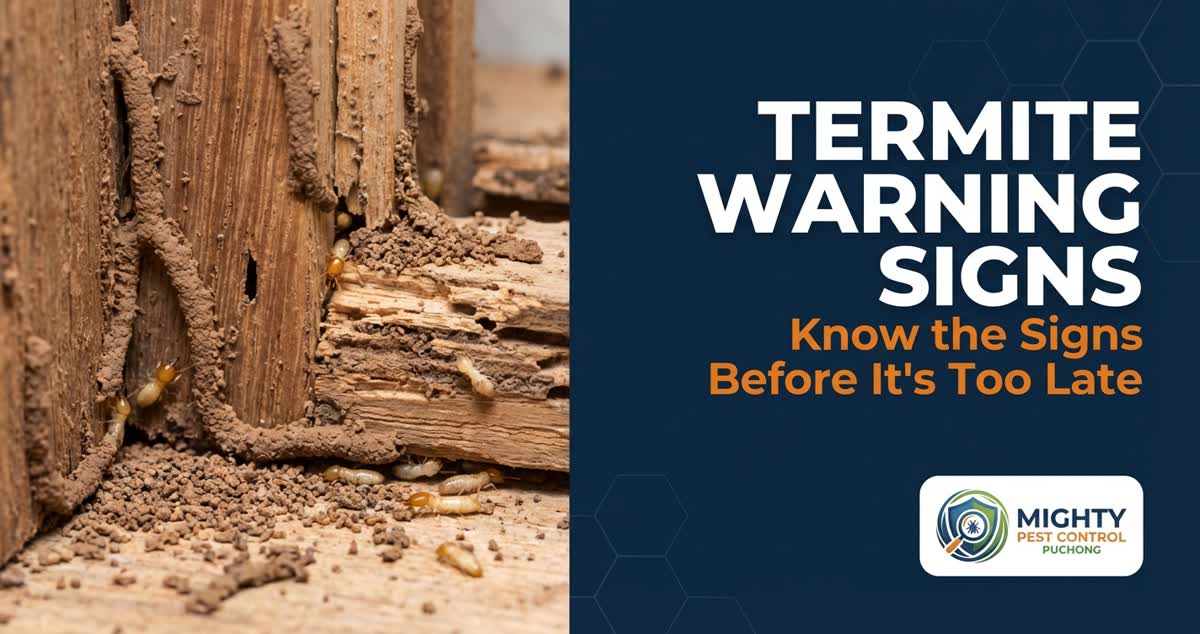
After more than a decade inspecting homes across Puchong and the Klang Valley, I can tell you this: most homeowners only discover termites when the damage is already serious. A door frame crumbles. A ceiling beam sags. By then, the colony has been feasting for months — sometimes years.
The good news? Termites always leave clues. If you know what to look for, you can catch an infestation early and save yourself thousands of ringgit in structural repairs. In this guide, I'll walk you through the telltale signs I check during every professional inspection, and what you should do if you spot them in your home.
Understanding Termites in Malaysia
Malaysia's tropical climate is a paradise for termites. Warm temperatures and high humidity all year round mean that termite colonies never go dormant — they feed 24 hours a day, 365 days a year. The most common species we encounter in Puchong and surrounding areas are subterranean termites (Coptotermes), which build their nests underground and travel through mud tubes to reach the wood in your home.
Drywood termites are less common here but equally destructive. They live entirely inside the wood they consume, making them harder to detect until significant damage has occurred.
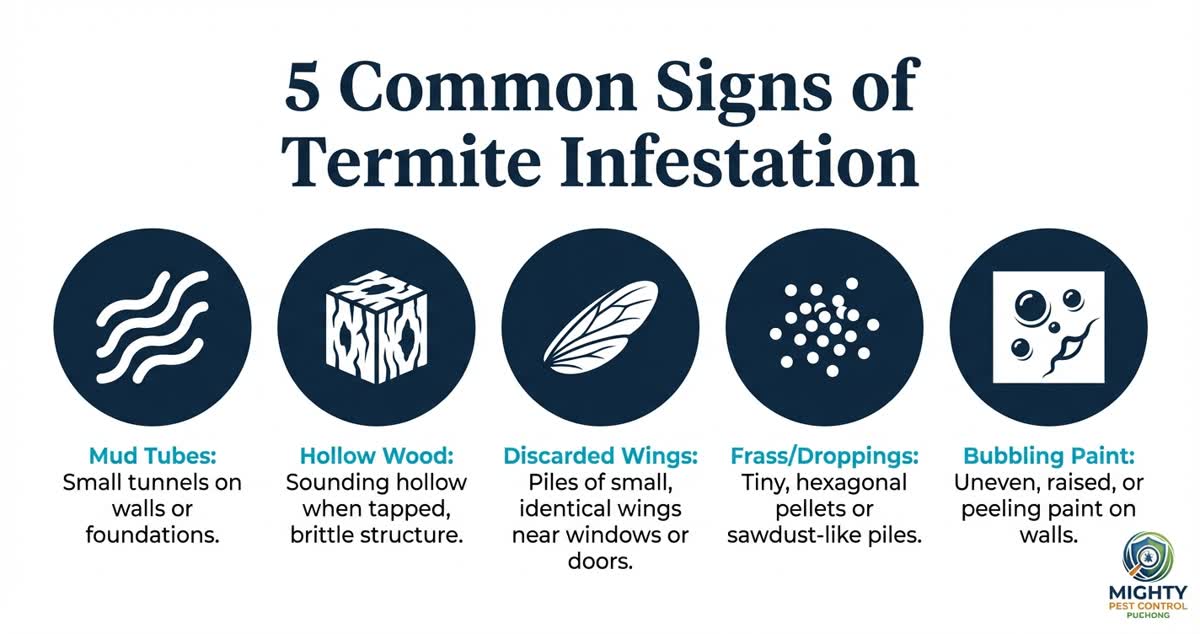
5 Warning Signs Your Home Has Termites
1. Mud Tubes on Walls and Foundations
This is the most obvious sign, yet many homeowners walk past them daily without realising what they are. Mud tubes are pencil-width tunnels made of soil, wood particles, and termite saliva. You'll find them running along exterior walls, foundation edges, along pipes, and inside kitchen cabinets.
Subterranean termites build these tubes to travel safely between their underground colony and your home's wood. If you break a mud tube and see tiny white insects, the infestation is active. Even if it appears empty, termites may have simply moved to a different route.
2. Hollow-Sounding Wood
Tap your door frames, window sills, skirting boards, and any exposed wood with a screwdriver handle. Solid wood produces a firm, resonant sound. Termite-damaged wood sounds hollow or papery because the insects eat wood from the inside out, leaving only a thin veneer on the surface.
In my inspections across Puchong terrace houses, door frames are the most commonly affected area — especially those on the ground floor near bathrooms where moisture levels are higher.
3. Discarded Wings Near Windows and Doors
Termite swarmers (called alates) emerge from mature colonies during the rainy season to mate and start new colonies. After landing, they shed their wings. Finding piles of tiny, translucent wings on windowsills, near light fixtures, or by doorways is a strong indicator that a colony is nearby — possibly already inside your walls.
Many people mistake these for flying ant wings. The key difference: termite wings are all the same length, while ant wings have a longer front pair.
4. Frass (Termite Droppings)
Drywood termites push their droppings out of small holes in the wood. These droppings — called frass — look like tiny, dark, granular pellets, similar to coarse sand or sawdust. If you notice small piles of what looks like sawdust beneath wooden furniture or along baseboards, it could be frass.
5. Bubbling or Peeling Paint
When termites feed on wood behind painted surfaces, moisture from their activity causes paint to bubble, crack, or peel. This is often mistaken for water damage. If there's no obvious water source causing the peeling, investigate further — termites could be the culprit.
Where to Check in Your Home
Based on my experience treating homes in Bandar Puteri, Taman Kinrara, and throughout Puchong, here are the hotspots I always inspect:
- Ground floor door frames — especially near wet areas like bathrooms and kitchens
- Kitchen cabinets — check the back panels and underneath the sink
- Roof structure — timber roof trusses are vulnerable, particularly in older terrace houses
- External perimeter — walk around the outside of your home and check the base of walls for mud tubes
- Built-in wardrobes — the back panels that sit against the wall
- Electrical junction boxes — termites are attracted to the warmth
DIY vs Professional Inspection
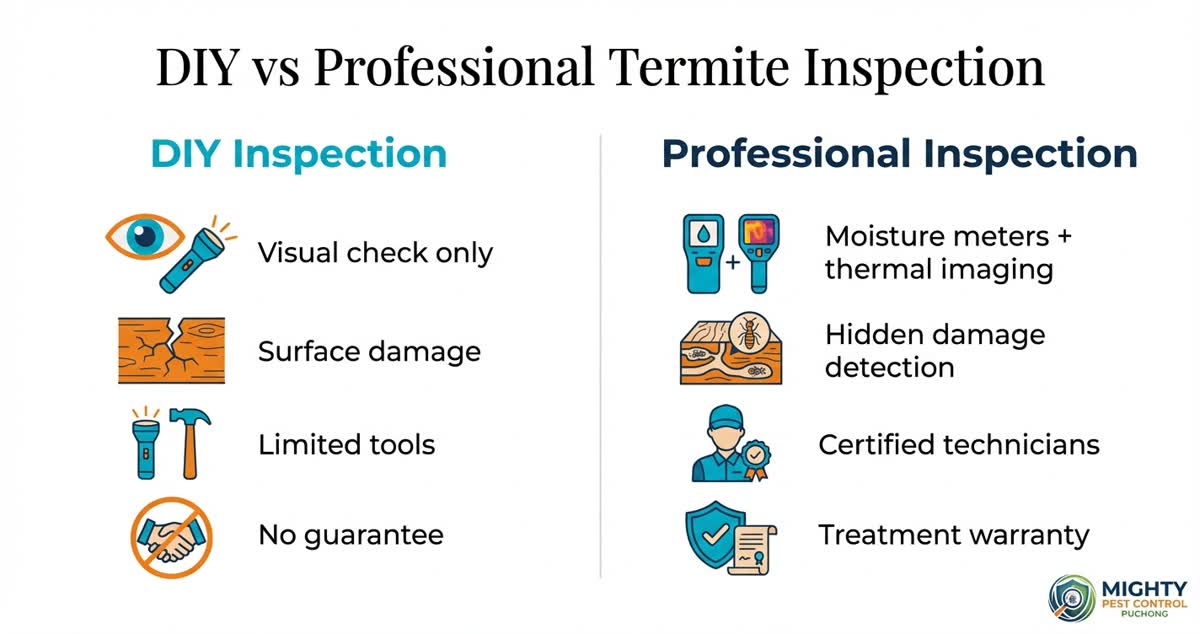
A visual check is a great first step, and I encourage every homeowner to do one at least once a quarter. However, professional inspections go much deeper. We use moisture meters to detect elevated moisture levels behind walls — a telltale sign of hidden termite activity. Thermal imaging cameras reveal heat signatures from large colonies concealed within wall cavities.
The reality is that by the time termites become visible to the naked eye, the colony is already well-established. Professional tools let us catch infestations at an earlier stage, when treatment is simpler and less costly.
What to Do If You Find Signs of Termites
- Don't disturb them. Your instinct might be to spray insecticide or break apart the mud tubes. Resist that urge. Disturbing termites causes them to scatter and establish new feeding routes, making treatment harder.
- Document what you see. Take photos of any mud tubes, damaged wood, or wings. Note the location in your home.
- Call a professional immediately. Termite treatment requires specialised knowledge and products. DIY sprays from the hardware store won't eliminate a colony — they just push it elsewhere.
- Get a proper assessment. A reputable pest control company will inspect your entire property, identify the species, estimate the extent of damage, and recommend the most effective treatment plan.
Suspect Termites in Your Home?
Don't wait for the damage to get worse. Our team provides thorough termite inspections across Puchong with same-day availability.
📱 WhatsApp Us for Free ConsultationOr call 03-6096 0068
Prevention Tips
Once your home is treated, or if you want to reduce the risk of infestation in the first place:
- Fix any water leaks promptly — termites are drawn to moisture
- Ensure proper drainage around your home's foundation
- Keep firewood, cardboard boxes, and timber away from the building
- Maintain ventilation in sub-floor areas
- Schedule regular professional pest control inspections — at minimum, once a year
Termites are a fact of life in Malaysia's climate. But with early detection and the right treatment approach, they don't have to become an expensive problem. Stay vigilant, check your home regularly, and don't hesitate to call in the professionals when something looks off.